Building a Career in the Andrology Lab: Skills, Training and Opportunities in India
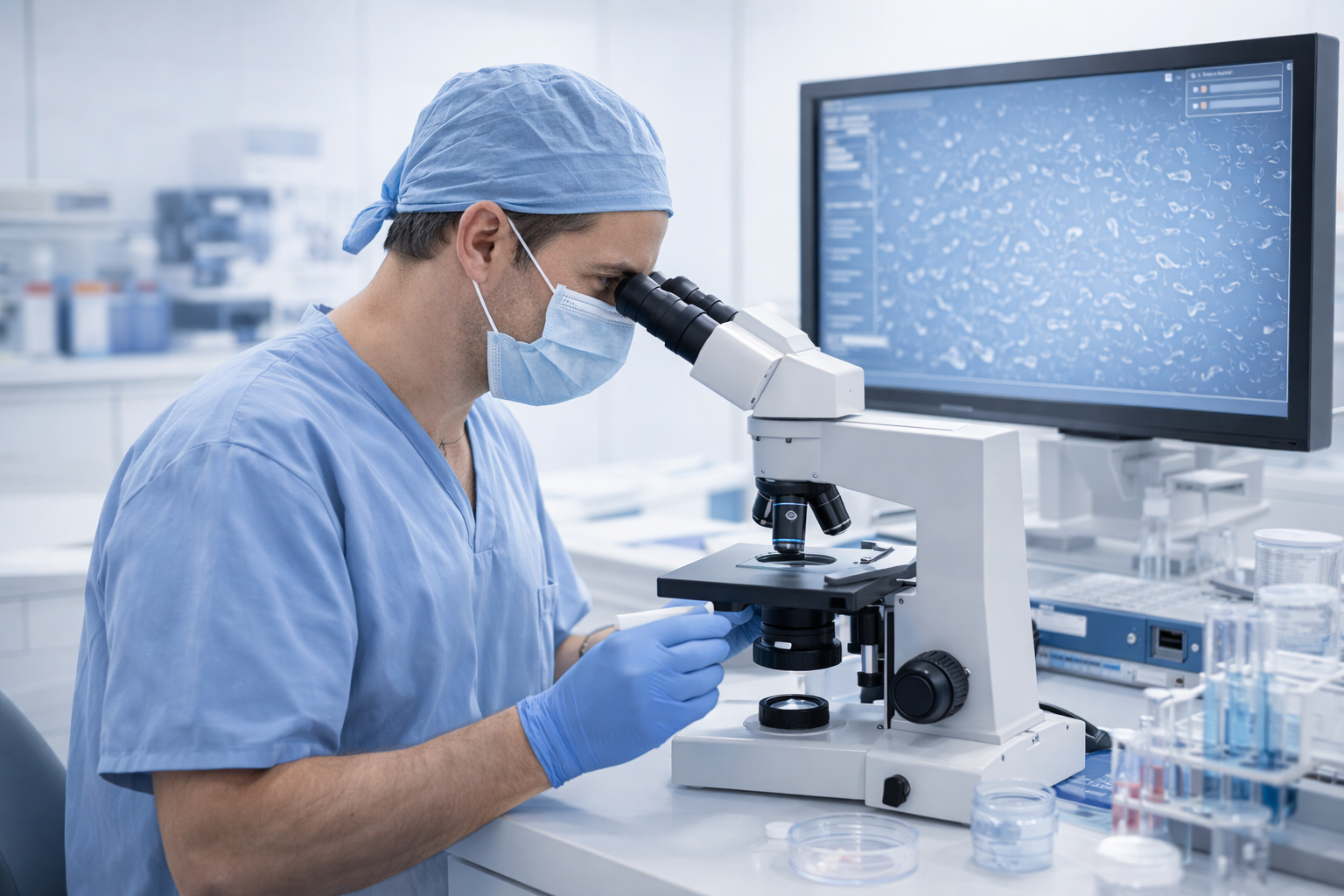
Male factor contributes to a substantial share of infertility cases, yet the andrology laboratory often receives less attention than the embryology lab. For science graduates and laboratory professionals, andrology offers a focused, skilled and in-demand career within fertility care.
What does an andrology laboratory do?
Andrology laboratories support the evaluation and treatment of male fertility. Typical work includes:
- Semen analysis following standardised WHO methods
- Sperm preparation for IUI, IVF and ICSI, using density gradient or swim-up techniques
- Sperm cryopreservation - for fertility preservation before cancer treatment, for donor programmes and for convenience in IVF cycles
- Specialised tests, such as vitality testing, antisperm antibody testing and, in some labs, sperm DNA fragmentation testing
- Post-vasectomy semen analysis
- Processing surgically retrieved sperm in collaboration with urologists and embryologists
Core skills
Technical skills
- Accurate microscopy and counting technique
- Classifying motility at a controlled temperature
- Assessing morphology with strict criteria and proper staining
- Sperm preparation methods and when to use each
- Cryopreservation and storage protocols
Quality and documentation
- Following standard operating procedures consistently
- Internal quality control and participation in external quality assessment
- Careful sample identification, labelling and witnessing
- Clear, accurate reporting
Communication
Andrology staff often explain collection instructions to patients and need to handle a sensitive subject with professionalism and discretion.
Who can work in andrology?
Andrology laboratories typically employ graduates and postgraduates in life sciences, such as biotechnology, microbiology, biochemistry, zoology and medical laboratory technology, as well as clinical embryologists, who often cover andrology in smaller centres. Hands-on training in standardised methods is what makes candidates job-ready.
Why standardised training matters
Semen analysis looks simple, but results vary widely between laboratories when methods are not standardised. Training based on the WHO 6th edition laboratory manual teaches the correct methods and the quality controls that make results reliable.
Career paths
- Andrology technologist in a fertility centre, hospital or diagnostic laboratory
- Embryologist with andrology responsibilities, a common combination in IVF centres
- Sperm bank roles, in donor screening, processing and cryostorage
- Quality and training roles in larger laboratory networks
- Industry roles with diagnostics and laboratory equipment companies
As fertility services expand across Indian cities, centres need staff who can deliver reliable andrology results from day one.
Getting trained
ReproNest's Advanced Andrology & Semen Analysis Certification offers hands-on training in semen analysis, sperm preparation and cryopreservation using WHO 6th edition protocols. Many trainees combine it with our Clinical Embryology & IVF Lab Training for a broader laboratory career. Contact us to get started.
About the Author
ReproNest Academic Team
Medical Expert
Specialist in Reproductive Sciences with years of clinical and educational experience.