Hysteroscopy Training for Gynaecologists: Building Diagnostic and Operative Skills
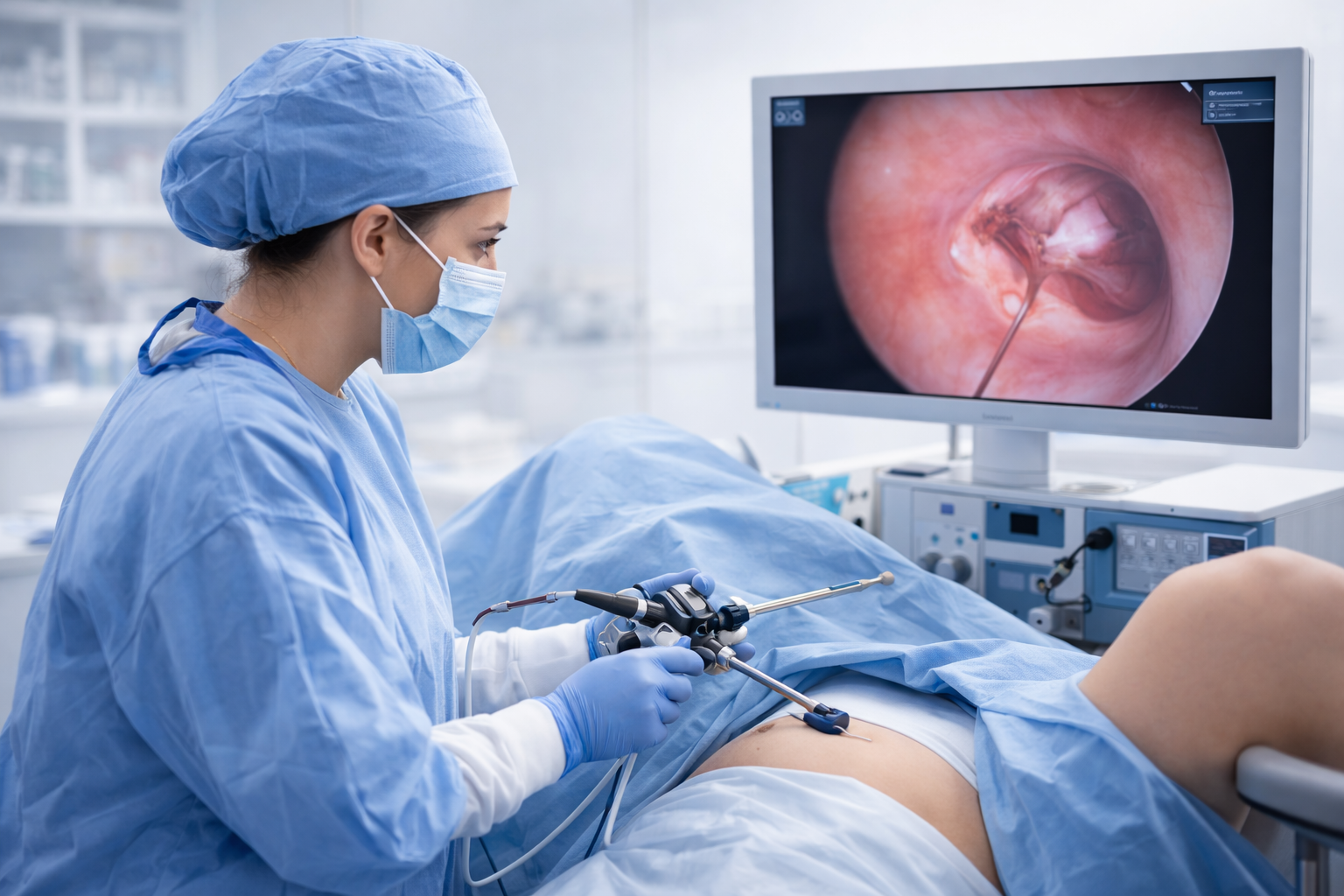
Hysteroscopy lets the gynaecologist look directly inside the uterine cavity and, when needed, treat what is found in the same sitting. For anyone working in infertility, it is one of the most useful skills to have. Training is usually built in two stages: diagnostic hysteroscopy first, then operative hysteroscopy.
Diagnostic hysteroscopy
Diagnostic hysteroscopy is used to evaluate the uterine cavity and cervical canal. Common indications include:
- Abnormal uterine bleeding
- Suspected polyps, submucous fibroids or uterine septum
- Suspected intrauterine adhesions (Asherman syndrome)
- Evaluation before or after unsuccessful fertility treatment
- Retained products or misplaced intrauterine devices
With modern small-diameter scopes, many diagnostic procedures can be performed in an office or outpatient setting, often using a vaginoscopic ("no-touch") approach without a speculum or tenaculum, which improves patient comfort.
Core diagnostic skills
- Assembling and checking the equipment: scope, light source, camera and distension system
- Choosing the distension medium and pressure
- Navigating the cervical canal atraumatically
- Systematic inspection of the cavity: both tubal ostia, all walls and the fundus
- Recognising normal appearances and common pathology
- Documenting findings clearly
Operative hysteroscopy
Operative hysteroscopy treats intrauterine pathology. Typical procedures include:
- Polypectomy
- Resection of submucous fibroids
- Septum resection
- Adhesiolysis for intrauterine adhesions
- Targeted biopsy and removal of foreign bodies
These require mechanical instruments (scissors, graspers), electrosurgical resectoscopes or tissue removal systems, along with a deeper understanding of safety.
Safety principles every trainee must learn
- Fluid management: monitoring the difference between fluid instilled and recovered, and knowing the limits for the medium in use
- Choice of energy and medium: bipolar systems are used with isotonic solutions such as normal saline, while monopolar systems need non-electrolyte media, which carry different risks
- Avoiding perforation: careful entry, keeping orientation, and stopping when the view is lost
- Recognising complications early: fluid overload, bleeding and perforation
How training should progress
- Theory and equipment workshops - understanding instruments, media and energy
- Simulation and dry-lab practice - building hand-eye coordination with box trainers or simulators
- Supervised diagnostic procedures on patients
- Supervised operative procedures, starting with simpler cases like polypectomy before moving to septum resection or myomectomy
A logbook recording procedures performed, findings and complications is the best way to track progress towards independent practice.
Why hysteroscopy matters in fertility practice
Intrauterine pathology can affect implantation, and hysteroscopy is the reference method for evaluating the cavity. Read more in our article on the role of hysteroscopy in infertility and recurrent implantation failure.
Train with ReproNest
ReproNest's Diagnostic & Operative Hysteroscopy Surgical Training in Delhi NCR takes gynaecologists from equipment basics to supervised operative procedures. It pairs well with our Fellowship in Reproductive Medicine. Contact us to know more about the schedule.
About the Author
ReproNest Academic Team
Medical Expert
Specialist in Reproductive Sciences with years of clinical and educational experience.